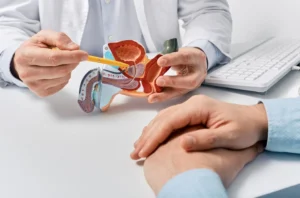
Reconstructive surgery of the male genital area is a branch of urology that focuses on restoring the functions and structures of the urogenital system damaged by a variety of pathological conditions. These conditions may include congenital problems, traumatic injuries, the consequences of medical treatments, or diseases that affect patients' quality of life.
This type of surgery has evolved significantly in terms of techniques, materials, and implants, offering more effective and personalized comprehensive solutions for a variety of problems that affect men's health and confidence.
Common pathologies treated with reconstructive surgery
1. Congenital malformations
- Hypospadias and epispadias: birth defects in which the urethral opening is not at the tip of the penis.
- Severe congenital phimosis: when the foreskin cannot be retracted and causes urinary problems or recurrent infections.
- Micropenis: insufficient development of the penis that may require surgical correction in some cases.
2. Trauma or injuries
- Penile fractureRupture of the corpora cavernosa, usually during sexual intercourse or accidents.
- Traumatic amputation: Reconstruction or reimplantation in cases of serious injuries.
- Burns or tissue damage: Reconstruction after accidents or previous surgeries.
- Bladder fistulas: abnormal openings between the bladder and other organs such as the vagina or rectum, allowing the involuntary passage of urine to unwanted places.
- Urethral stricture: This occurs when scar tissue forms in the urethra, reducing its diameter and causing difficulty urinating.
3. Diseases or infections
- Peyronie's diseaseWhen the curvature of the penis causes pain or makes sexual relations impossible.
- Fournier gangrene: Necrotizing infection that requires tissue reconstruction.
- Penile or scrotal cancerReconstructive surgery after tumor removal.
4. Functional or aesthetic problems
- Erectile dysfunction of structural originStructural problems in the penis that prevent achieving or maintaining an erection sufficient for sexual intercourse. A penile prosthesis is implanted.
- Unsatisfactory circumcision correctionTissue recovery or aesthetic improvement.
- Gender reassignment: In cases of female-to-male transition (phalloplasty or metoidioplasty).
5. Reversal of previous procedures
- Vasectomy reversalWhen the goal is to restore fertility.
- Urethral reconstruction: Due to stenosis (narrowing) after infections or surgeries.
Cutting-edge procedures in reconstructive surgery
To address these conditions, urologic reconstructive surgery utilizes a number of advanced procedures, including:
- Artificial urinary sphincter implant: procedure intended to restore urinary control in patients with severe incontinence, by implantation of a device that simulates the function of the sphincter.
- Bladder reconstructionIt is performed to correct damage or deformities in the bladder caused by congenital conditions, trauma, radiation treatments, or surgeries to remove tumors.
- Fistula repairThis procedure specializes in the closure of the fistulas that affect the bladder and other genitourinary structures, restoring the integrity of the urinary system.
- Genital reconstructionIt uses plastic surgery techniques and complex procedures such as grafting to restore the appearance and function of the genitals after cancer surgeries, injuries, or diseases such as Peyronie's disease.
- Pelvic prolapse repair and pelvic support: includes the implementation of mesh and other devices to restore pelvic support and correct organ prolapse.
- Penile prosthesis placementThis refers to the placement of a device inside the penis to facilitate erection in cases of severe erectile dysfunction. There are several options available. penile implants, tailored to the specific needs of the patient that provide lasting results and a significant improvement in quality of life.
- Urethral reconstruction: aimed at removing scar tissue and restoring the urethra in cases of stenosisthus improving urinary function.
The latest advances in surgical techniques such as microsurgery and robotic surgery allow for more precise procedures with less tissue damage, improving recovery and reducing complications.
Each of these techniques offers a specific solution for the complex and diverse conditions that can affect the urogenital system, with the goal of significantly improving quality of life. Beyond restoring the functionality of the genitourinary system, andrological reconstructive surgery also aims to improve aesthetics and body image.
The complexity of this type of surgery requires highly experienced urological surgeons who are also able to convey realistic expectations and inform patients of the risks and benefits of the procedure.