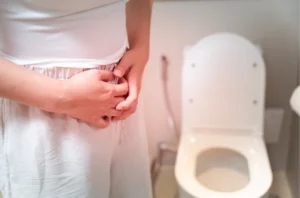
Many men have experienced it at some point, but few dare to mention it in a doctor's office. They urinate normally, zip up their pants… and seconds later, a small leak of urine appears. It's not incontinence as such; there's no urgency or continuous leakage, but it's uncomfortable, unsightly, and sometimes disconcerting.
This phenomenon has a medical name: post-void dribble . It is more common than you might think and, in most cases, has a simple explanation.
What exactly is post-void dribbling?
Post-micturition dribbling is the involuntary leakage of a few drops of urine immediately after urination , when it appears to have finished. It can occur while walking, sitting, or even minutes after leaving the bathroom.
This should not be confused with classic urinary incontinence . Here, there is no constant or exertional leakage; it is a residual amount of urine that remains trapped in the urethra and is released later.
Why does it occur?
The most common cause is incomplete emptying of the urethra , especially its final section. Under normal conditions, after urination, certain pelvic floor muscles contract and "squeeze" the urethra to expel the remaining urine. When this mechanism fails, some urine is retained and eventually comes out later.
Among the factors that contribute to this problem are:
- Pelvic floor weakness, something more common from the age of 40-50.
- Prostate disorders, like the benign prostatic hyperplasia.
- Previous surgeries over the prostate or urethra.
- Changes in urethral anatomywhether due to age or repeated inflammation.
- Sedentary lifestyle and overweight, which affect muscle tone.
In young men, post-micturition dribbling is usually related to a lack of muscle coordination rather than a structural disease.
Is it something normal?
From a medical standpoint, it's common and generally benign, but that doesn't mean it should simply be considered normal. It doesn't pose a health risk, but it can affect quality of life , cause insecurity, and lead to daily discomfort.
Furthermore, in some cases it may be the first sign of an incipient prostate problem or pelvic floor dysfunction that should be assessed.
When is it appropriate to worry or seek advice?
There are certain situations in which post-void dribbling warrants a more detailed urological evaluation. Especially if:
- It appears gradually and is increasing.
- It is accompanied by a weak stream, difficulty starting urination, or a feeling of incomplete emptying.
- There is burning, pain, or repeated urinary tract infections.
- It is associated with urine leakage at other times of the day.
- There has been previous prostate surgery.
In these cases, a proper assessment allows us to rule out treatable causes and prevent the problem from progressing.
Do you have treatment?
Post-void dribbling is treatable, and in most cases, the treatment is simple and effective. It can range from postural adjustments and techniques for better urethral emptying to specific pelvic floor strengthening exercises. In certain situations, treating the prostate or the underlying cause significantly improves the dribbling. The most important thing is not to resign yourself to it or simply assume that "it's just a sign of getting older."
Does this happen to you and you want a professional assessment?
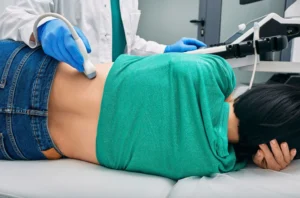
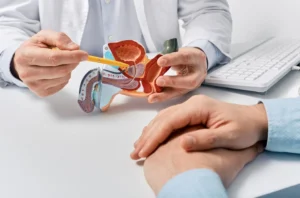
At ROC Clinic, we perform a comprehensive and personalized urological examination , aimed not only at ruling out prostate problems but also at improving your quality of life. If you notice dribbling after urination or any other changes in your urination, consult a urologist . Sometimes, minor symptoms have very simple solutions when addressed early.