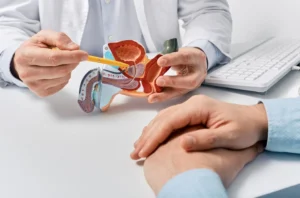
Men's desire for a larger penis has led to the development of many penis enlargement techniques.
Throughout history, the penis has been considered a symbol of masculinity, generating great anxiety and excessive concern about penis length and thickness in many men for fear of being negatively evaluated by others.
Up to 50% of men perceive their penis as smaller than average when, in reality, it is of average size (the average thickness of an erect penis is 13,1 cm and 11,65 cm, respectively). This preconceived notion, reinforced by the media and pornography consumption, leads many men to request penis enlargement surgery.
Several methods have been adopted to increase penile girth, from the injection of various substances, the placement of grafts and flaps, to more invasive methods such as cosmetic phalloplasty.
Surgery boasts high success and satisfaction rates, but it is also the most invasive method. Recently, less invasive methods have gained popularity despite limited scientific evidence and inconsistent results. Below, we discuss the existing non-surgical penis enlargement methods and debunk common myths about them:
Penis thickening techniques without surgery
Vacuum device
A vacuum device is a mechanical device that uses negative pressure created by a suction pump to draw venous blood from the circulation into the corpora cavernosa. Although there is extensive medical literature on vacuum devices for penile rehabilitation after surgery (prostatectomy, urethroplasty, cystectomy, penile prosthesis, etc.), there are few studies on their use for purely cosmetic purposes.
Given the scarcity of data, there is no evidence to confirm the actual benefit of vacuum therapy for the aesthetic improvement of the penis.
Injection therapies
Because it is a minimally invasive and low-cost technique, soft tissue fillers are one of the most widespread cosmetic surgery procedures today. In the United States alone, nearly 3 million procedures are performed annually. However, the fact that it is a simple procedure does not exempt it from the possibility of causing permanent consequences and aesthetic and functional defects, especially if performed by underqualified and/or inexperienced personnel.
Silicone
Since their widespread use at the beginning of World War II, the safety of silicone-based injections has raised concerns among regulatory authorities, to the point that they were banned from the market in 1976 by the U.S. Food and Drug Administration (FDA) . These compounds cause a granulomatous inflammatory reaction around silicone cysts, with obliteration or dysfunction of the microcirculation, both vascular and lymphatic. Complications can range from mild, such as inflammation with severe edema or migration of the injection fluid (liquid injectable silicone, SIL), to severe, such as distortion of the penile shaft with secondary erectile dysfunction, abscess formation, and even silicone pneumonitis, embolism, and/or multiple organ failure.
These reasons have generated, over the years, a vast medical literature on the surgical procedures available for the removal of silicone and the correction of the resulting deformities.
Grease
Autologous fat grafting involves harvesting fat via liposuction, preparing it, and then injecting it subcutaneously . There is considerable literature on this procedure, which has seen both complications and continuous evolution over the years.
Panfilov et al. injected up to 70 ml of autologous body fat through a preputial incision in 60 patients, 31 of whom underwent another injection at six months, with a mean increase in circumference of 2,65 (1,4–4) cm after one year. Kang et al. reported similar results in 52 patients, with a mean increase in circumference of 2,5 cm six months post-procedure. The thickness of the distal third of the penis was 7,06 (SD 0,37) cm before treatment and 9,34 (SD 0,86) cm after treatment.
In these two studies, no noteworthy complications were reported, and it is remarkable how the gained circumference was preserved after several months, despite the exposure of adipocytes to reabsorption in highly vascularized tissue. However, the need for a second injection to maintain the gained thickness appears to be quite common . The most frequent complications are moderate, such as pain, altered vibratory sensation, formation of residual fat nodules, skin deformities, and scarring, but a single, but not insignificant, case of death from fat embolism has been reported following the injection of 70 ml of autologous fat in a 30-year-old man.
The use of autologous fat is still an experimental method ; patients should be informed about possible complications and the need for further injections to preserve the thickness gained.
Soft tissue fillings
The use of soft tissue fillers for aesthetic purposes has steadily increased thanks to their minimally invasive nature and cost-effectiveness compared to more invasive procedures, as well as their versatility for use in various areas of the body.
The injected agents can be divided into resorbable fillers (hyaluronic acid, HA) and non-resorbable fillers (polymethyl methacrylate microparticles, PMMA) with different biochemical characteristics: the former (HA) has passive action while the latter (PMMA) has delayed action, but with a biostimulating effect.
Soft tissue fillers are administered in four to six injections, evenly distributed on each side. Two lines parallel to the corpus spongiosum of the urethra are drawn to delineate the area to be preserved. An automatic injection gun is used to inject precise volumes of filler, typically 0,1 ml, between Buck's fascia and the deepest part of the dartos muscle.
- Hyaluronic acid (HA): Hyaluronic acid (HA) is the most widely used long-lasting, resorbable agent in aesthetic medicine. Its biological characteristics make HA an ideal soft tissue filler due to its non-migratory and long-lasting effect, resulting from its stability at the injection site, its relatively affordable cost, its biocompatibility, and its non-antigenicity, which means it does not cause inflammation or autoimmune reactions. Thanks to its ability to bind water molecules, it can maintain the volume achieved at the time of injection for several months. Kwak et al. subjected the penis to a 20 ml injection of HA, obtaining an improvement in circumference from a baseline of 7,48 (SD 0,35) cm: 11,41 (SD 0,34) cm at one month and 11,26 (SD 0,33) cm at 18 months. Occasionally, patient satisfaction was affected by decreased sensitivity and rigidity of the shaft during erection, secondary to the coating of the corpora cavernosa by the HA. No major complications were recorded in the study, but arterial embolization is mentioned in the medical literature regarding hyaluronic acid (HA) used in other tissues. This represents a potential complication, although it has not been described in any cases of penile injections.
- Polymethyl methacrylate (PMMA) microspheres: It is the most prominent example of the family of non-resorbable agents. Polymethyl methacrylate microparticles are suspended in solutions of bovine collagen or cellulose, and once injected, they induce a granulomatous reaction in the injection site, which consequently becomes enriched with new supporting vascular tissue. They have been synthesized in recent years and have already been approved in several countries [80]. Casavantes et al. subjected 729 men to 2-3 injection sessions, achieving not only an increase in mean circumference of 2,21 (SD 1,16) cm, but also an increase in mean flaccid penile length of 0,7 cm, probably due to PMMA's ability to create a more rigid shaft at rest. 83% of the patients were satisfied with the postoperative results. Unfortunately, 52% of patients directly witnessed stem deformities secondary to the formation of single or multiple nodules and clefts due to void areas. The development of granulomas has never been scientifically proven; rather, it is often mistaken for simple nodules due to heterogeneous accumulation, as there is insufficient immune reactivity between the Dartos and Buck's fascia for their formation. In an attempt to shed light on the potential differences between the two fillers, Yang et al., in a randomized multicenter study of 69 patients, compared mean circumference results at 6 and 18 months between newly synthesized cross-linked HA and PMMA. The mean circumference gained by both fillers did not differ by more than 0,2 cm. However, the loss of this gain from 1 to 18 months was greater in the HA group than in the PMMA group (43% vs. 21%). Furthermore, excluding two cases of inflammation and three of pain at the injection site, no major complications were recorded. An interesting note is how satisfaction with sexual performance increases even though the girth gain is lost in the following months. There is often a psychological component for most patients seeking cosmetic surgery, and this significant psychological distress can usually be alleviated with these treatments.
Unfortunately, there are still few studies with long-term follow-up and a comprehensive assessment of the sexual and psychological impact before and after treatment. Furthermore, although several types of fillers have been introduced, only some are marketed in all countries.